
Replanting in the same footprint
You want a new tree, shrub bed, or sod in the spot the old one occupied. Requires a deeper replant-ready grind so the new root system has clean soil.
The oak came down three months ago and the stump is sprouting suckers. The palm got removed after Ganoderma killed it and you can’t replant in the same spot. The HOA sent a letter about the rotted stump in the front yard. Stumps don’t solve themselves in Port St. Lucie, FL or anywhere on the Treasure Coast, sandy soil, summer rain, and warm winters mean the wood sits there feeding termites, fungi, and regrowth for years. Free same-day assessment · Written scope in 4 hours · COI before any equipment touches the property.
A homeowner-grade rental grinder is not the same machine and not the same result. Swift matches the right machine to the right lot, self-propelled 35-90 HP for open work, tracked grinder for sloped and soft soil, hand-guided for tight side yards. Sandy-soil settlement, irrigation routing, and root flare extent are all part of the assessment before the teeth touch the wood.
Request a free quote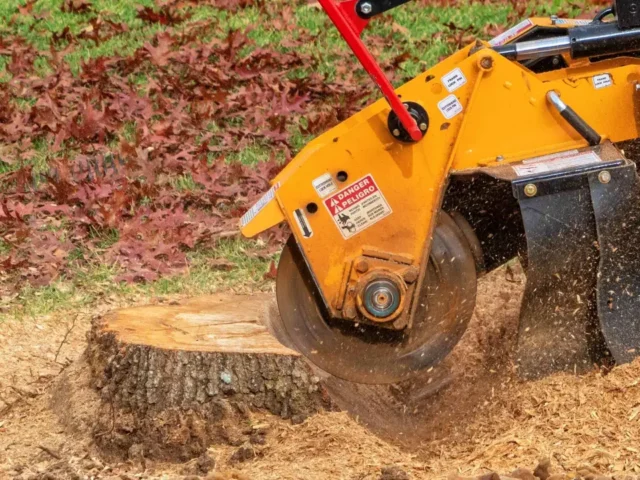
Not every stump needs to come out the same way. Knowing which situation you have saves time and money. For trees that haven’t been cut down yet, the removal and grinding route through the same scope, see Tree Removal.
You want a new tree, shrub bed, or sod in the spot the old one occupied. Requires a deeper replant-ready grind so the new root system has clean soil.
The stump is visible, dangerous, or in violation of community rules. Standard below-grade grind solves it and the lawn flows over the top.
Stumps host termites, carpenter ants, and wood-decay fungi that spread to nearby healthy trees. Removing the food source removes the risk.
Species like ficus and Australian pine keep sending up shoots until the root crown is reduced. Deeper grind plus follow-up monitoring is the fix.
Construction requires the root mass out of the soil profile. Grind goes below the planned excavation depth so footers and slabs can install without obstruction.
A stump grinder is a serious piece of equipment, and the soil profile under a Port St. Lucie lot rarely looks the way the homeowner thinks it does. Florida sandy soils drain fast, settle fast, and erode fast.
811 utility location for primary utilities (electric, gas, water, telecom, cable) before any job near a public right-of-way
Irrigation lines typically buried 6 to 12 inches in sandy Port St. Lucie soil, easy to clip without a locate
Septic systems and drain fields that must not be driven over or ground into
Low-voltage landscape lighting wires buried just below the mulch line, frequently undocumented
Sandy-soil collapse risk around the stump void after grinding, especially near pool decks and retaining walls. We backfill and tamp on site
ISA Certified Arborist or senior crew lead walks the utility locations, irrigation routing, slope, and access constraints. Diameter measured, root flare noted, target depth confirmed.
Self-propelled grinder for most residential work, tracked grinder for sloped/soft soil, hand-guided for tight side yards. The right machine prevents a torn-up yard.
Controlled passes to the agreed depth. 811 marks honored. Irrigation and low-voltage routes flagged. Chips contained when haul-off is in scope.
Chips and soil mounded for settling (default), or hauled off with clean topsoil backfill, or spread as mulch elsewhere on the property. Your call, confirmed before the grinder starts.
Prolific suckering from root flares and surface roots. Requires deeper grind plus monitoring for return shoots. Single most regrowth-prone species we handle.
Category I FLEPPC invasive. Aggressive root suckering across a wide radius. Stump grinding plus root tracing is standard scope.
Category I invasive. Resprouts from cut stumps and root crowns. Cut-stump herbicide treatment paired with grinding gives the cleanest result.
Sour orange and other rootstock suckers come up well after the scion is gone. Grinding through the graft union usually solves it.
Cabbage, queen, washingtonia palms do not sucker from roots because palms are monocots without secondary growth. Exception: Ganoderma palms need soil management even after the stump is gone.
Swift quotes three standard depth tiers and adjusts to the situation. Tell us what is going on top of the stump next, and we will quote the right depth the first time.
The visible stump goes away, soil and chips refill the hole, sod can be laid over the top. Most common residential request.
Deeper reduction so a new tree or large shrub can establish a root system without hitting old wood. Required when you intend to plant the same spot.
Goes below the planned excavation depth so footers, slabs, pool shells, or hardscape can be installed without obstruction.
Permit rules vary by city and by county on the Treasure Coast. Most stump-grinding scopes do not require a separate permit when the tree itself was removed under a valid permit, or when the tree came down before current rules took effect. HOA compliance is its own conversation. Swift handles paperwork in-house when a permit, HOA notification, or arborist letter is required. For city-specific details, see the Stump Grinding page for your city.
Standard is 6 to 8 inches below grade for sod and visual cleanup. 12 to 18 inches for replanting in the same spot. Deeper still for slab, foundation, pool, or hardscape work. Tell us what is going on top next and we will quote the right depth.
Only with a 12 to 18 inch replant-ready grind and clean topsoil backfill. A standard 6 to 8 inch grind leaves residual wood that will rob nitrogen from the new root system and impede establishment.
We flag utility lines through 811, ask the homeowner to mark known irrigation and low-voltage lighting routes, and visually scan for surface indicators before grinding. Lines closer than 6 inches to a stump are at risk. Tell us about anything you know is buried nearby.
Most species, no. Ficus, Australian pine, Brazilian pepper, and certain rootstock citrus can send up suckers from the wider root system even after a deep grind. We address regrowth-prone species with deeper grinds and follow-up sucker monitoring.
Yes, with the right machine and ground protection. Hand-guided grinders work within inches of hardscape. Sandy-soil settlement is the main risk near pool decks and retaining walls, and we backfill and tamp to limit it.
The stump can be ground, but the Ganoderma fungus persists in the surrounding soil. Do not replant another palm in the same spot without soil management. Swift documents the affected zone during the assessment.
Your choice. Default is to leave the chips and soil mixed in the grind hole, mounded slightly for settling. Haul-off with clean topsoil backfill is available, and so is spreading the chips as mulch elsewhere on the property.
Most residential stumps grind in under 2 hours. Large oak root mats, ficus stumps with multiple flares, and multi-stump scopes take longer. The assessment scope gives a firm timeline.
Chips and soil refill the grind hole, mounded slightly to allow for settling. Decomposes into the soil over several months. Lowest-cost option.
All chips and ground material removed, hole backfilled with clean topsoil ready for sod or plantings. Required for most replant scopes.
Chips distributed across beds elsewhere on the lot, soil backfilled in the void. Good middle option for owners who want the mulch but not the mound.
A homeowner-grade rental grinder is not the same machine and not the same result. Swift mobilizes a builder-grade fleet sized to the stump and the access.
Standard residential and light commercial stumps.
Sloped lots, soft soil, access without leaving wheel ruts.
Tight side-yard access, gated backyards, stumps near hardscape.
Staging large stump chunks and chip cleanup.
Sandy-soil work near pool decks, driveways, and irrigation runs.
Ganoderma butt rot (Ganoderma zonatum) is a lethal palm disease across the Treasure Coast with no cure. Identification: half-moon-shaped conk at the base of the trunk, reddish-brown glazed top, white undersurface, up to 8 inches wide. Wilting canopy appears only after 80 to 90 percent of the trunk has rotted internally. When a Ganoderma palm comes out, the fungus persists in the surrounding soil. Swift documents the affected zone, grinds the stump and visible root mass, and recommends a no-replant radius for susceptible palm species. Do not replant another palm in a Ganoderma site without soil management. For ongoing palm care after a Ganoderma event, see Palm Trimming.
Two oak stumps right next to my driveway. Swift protected the concrete with plywood, ground them to 8 inches for replanting, and filled the holes clean. You can't tell anything was ever there.
Four stumps left from a clearing project. Swift bundled them at a discount, finished in one morning, and left the chips on-site for mulch just as I asked, no extra charge.
Stump was two feet from my pool screen. Swift assessed the safe-distance margin before the grinder got near it, hand-cut the surface roots close to the enclosure first, then finished with the machine. Careful and professional.
Same-day on-site assessment · Written quote in 4 hours · Fully insured · Family-owned