
Palm tree trimming typically costs $100 to $650 per palm, and palm removal runs $150 to $1,500. Height is the single biggest factor: a palm you can reach from a ladder sits at the bottom of those ranges, while a 60-footer over a screen enclosure sits near the top. Those figures come from national 2026 cost data published by HomeGuide and Angi, and they are a starting point, not a quote. What your palm actually costs depends on five things, and one of them is a permit requirement that most cost articles never mention.
This guide covers what you should expect to pay, what legitimately moves the price up or down, how to tell a fair quote from a cheap one that will cost you more later, and the Florida permit rules that can add a mitigation bill after the work is already done.
Palm Tree Trimming Cost by Height
Price tracks clear trunk height, meaning the bare trunk from the ground to the base of the fronds, not the total height of the plant. That is the measurement that decides whether a crew can work from the ground, needs a bucket truck, or has to send a climber up on spikes.
| Situation | Typical cost | Why |
|---|---|---|
| Most residential palms | $100 to $650 per palm | The standard range for typical yard palms |
| 30 to 60 ft tall | $150 to $900 | Bucket truck or climbing work |
| Over 80 ft tall | $1,000 to $1,500 | Specialist equipment, more crew, higher risk |
| Arborist labor, hourly basis | $100 to $250 per hour | Usually a one-hour minimum |
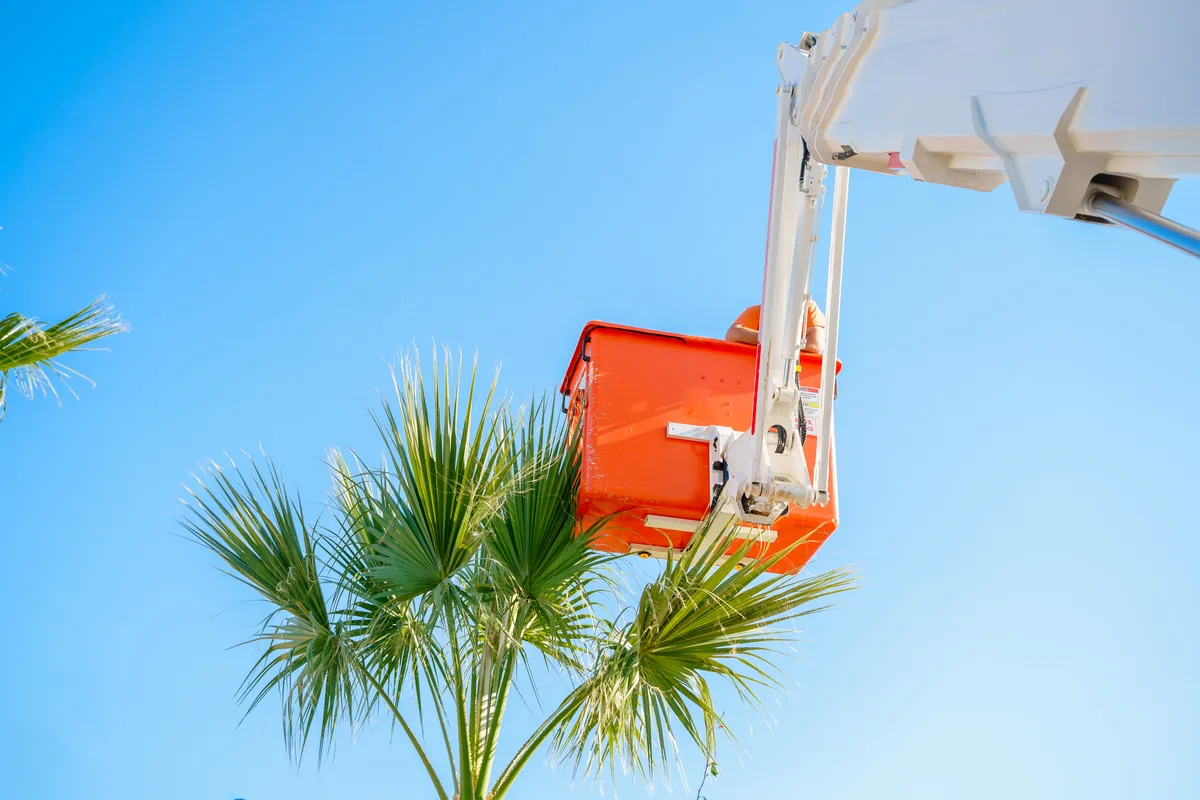
Most companies price per palm rather than hourly for routine work, and most will bring the per-palm price down when they are trimming several in one visit, because the expensive part is getting the truck and crew to your property in the first place. If you have four palms, ask for the group price rather than four separate quotes.
Palm Tree Removal Cost
| Situation | Typical cost |
|---|---|
| Palm removal, general range | $150 to $1,500 |
| Up to 60 ft tall | $150 to $900 |
| Over 80 ft tall | $700 to $1,500 |
| Stump grinding afterwards | $100 to $250 |
| Palm stump removal as an add-on | $80 to $250 extra |
| Hauling and disposing of the debris | $200 to $300 |
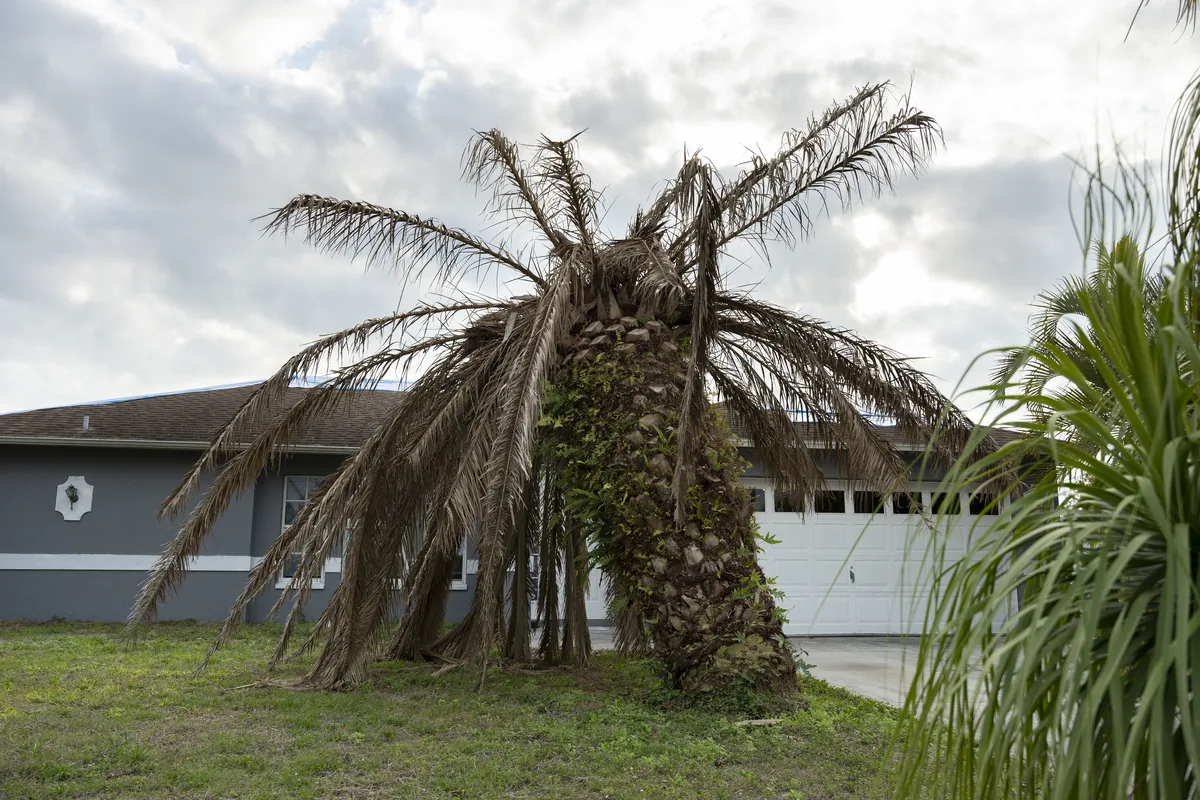
Removing a palm is often more predictable work than removing a hardwood of the same height, because a palm has no spreading canopy to dismantle limb by limb, unlike a hardwood tree removal. The trade-off is weight: a palm trunk is dense and wet, and a tall one has to be sectioned and lowered rather than dropped, especially near a pool cage, driveway, or power drop.
The Five Things That Actually Change Your Price
1. Clear trunk height
This is the biggest single factor and it is not linear. The jump from a ladder job to a bucket truck job is a real step up in cost, and the jump from a bucket truck to a climber or a crane is another. Two palms that look similar from your window can fall on opposite sides of one of those lines.
2. Access
If the truck can park within reach of the palm, the job is straightforward. If the palm is behind a gate, in a courtyard, between the house and the fence, or over a screen enclosure, the crew carries equipment in by hand and lowers every frond on a rope. That is labor, and labor is most of your bill. Access is the reason two identical palms on the same street can be quoted hundreds of dollars apart.
3. How long it has been
A palm on a regular cycle is quick work. A palm that has not been touched in several years carries a heavy skirt of dead fronds, old flower stalks, and seed pods, and frequently rats, wasps, or snakes living in it. That is slower, riskier, and generates far more debris to haul.
4. Debris volume and disposal
Hauling runs $200 to $300 on average when it is priced separately. Some companies fold it into the quote, some do not. This is the single most common surprise on a final invoice, so ask directly: is haul-away included?
5. What the palm is doing to you
Coconut palms need the fruit taken down safely, which is as much a liability job as a cosmetic one. A palm leaning over a roof, a pool, or a power line adds rigging and sometimes a utility coordination step. A dead or diseased palm may need to come out urgently rather than on schedule.
Costs by Palm Species
Species affects price mainly through height, frond weight, and debris volume.
- Queen palm. The most commonly trimmed palm in Florida landscapes. Fronds are heavy and wet, and queens are shallow rooted, so they are among the first to go over in a storm. If a queen keeps failing, replacement can be better value than repeat trimming.
- Sabal palm, also called cabbage palm. Florida’s state tree, hurricane hardy, and the species most likely to trigger a permit requirement, as covered below. Sabals need far less trimming than most homeowners assume.
- Coconut palm. Trimming usually includes removing coconuts. A falling coconut over a driveway or walkway is a genuine liability, and that work adds time.
- Royal palm. Royals drop very large, very heavy fronds on their own schedule. Cost here is mostly about controlling the drop zone safely rather than the cutting itself.
- Washingtonia, the Mexican fan palm. These grow tall fast, and price climbs with them. UF/IFAS notes that Mexican fan palms become mostly self-cleaning once they pass about 30 feet, so the calculation eventually shifts from routine trimming to occasional safety work.
Our palm trimming service page goes deeper into how each species should be handled and why.
Permits and Mitigation: the Cost Almost No Quote Includes
This is where Florida differs from the rest of the country, and where a cheap quote can turn into an expensive problem.
What Florida state law actually allows
There is a statewide exemption, and it is narrower than most homeowners think. Under Florida Statute 163.045, a residential property owner can prune or remove a tree without a local permit, fee, or mitigation, but only when all of the following are true:
- An ISA Certified Arborist or a Florida licensed landscape architect has provided documentation.
- That assessment follows the ISA Best Management Practices, Tree Risk Assessment, and is signed.
- The tree poses an unacceptable risk to people or property, meaning removal is the only practical way to bring the risk below moderate.
- The property is a single-family detached home on a lot actively used for single-family purposes.
Where it applies, the local government also cannot require you to replant. The statute does not cover shoreline trees, which are regulated separately.
What the statute does not do is let you remove a healthy palm you simply do not want. That still falls under local rules.
Where local rules bite
Florida tree ordinances are set city by city and county by county, and they are not consistent. Two things vary in ways that matter to your bill:
The protection threshold. Many Florida jurisdictions protect native palms once the clear trunk reaches a set height. Below that height the palm may be unregulated; above it, you need a permit. Because the threshold is measured in clear trunk height, the same measurement that drives your price also decides whether paperwork is required.
Mitigation. This is the one that catches people. In some jurisdictions removing a protected palm does not just cost a permit fee, it obliges you to plant replacements. That requirement lands after the removal is already done and paid for, and for native palms the replacement ratio can be more than one-for-one. A contractor who does not check will not warn you.
Before you accept any removal quote, ask two questions: is this palm protected where I live, and will I owe mitigation? If the answer is a shrug, get another quote.
Swift handles this paperwork for customers. It is included free with a removal we perform, or $250 as a standalone service if you only want the permit dealt with. See our permit concierge service.
Why the Cheapest Quote Often Costs the Most
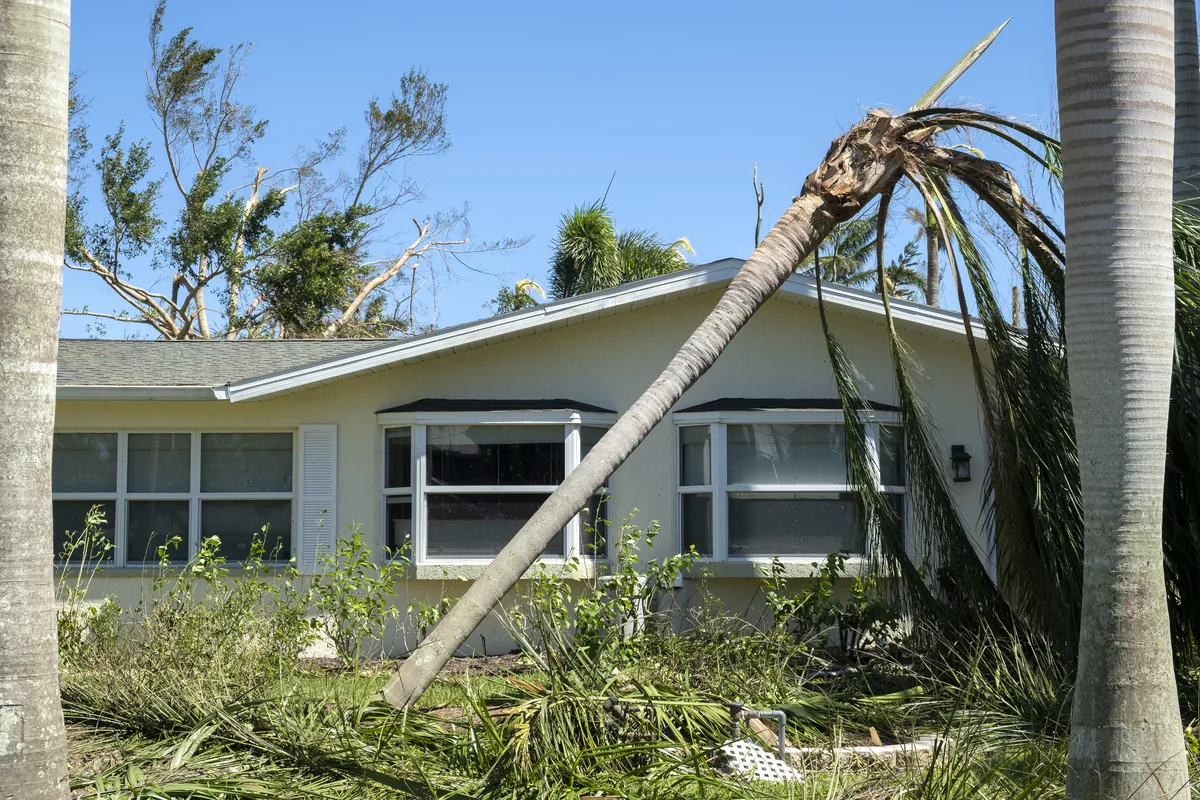
If one quote comes in far below the others, there is usually a reason, and the most common one is a hurricane cut: stripping the canopy back to a tuft of the youngest fronds, the shape people describe as nine and three.
It is quick, so it is cheap. It is also the wrong thing to do, and the research is not ambiguous. UF/IFAS reports that after the 2004 and 2005 Florida hurricanes, hurricane-cut palms were more likely to have their crowns snapped off than palms with fuller canopies, a finding supported by research on African oil palms. The cut marketed as storm protection is associated with worse storm outcomes.
There is a second cost. Potassium moves around inside a palm, travelling from older fronds to new growth. Cutting off older fronds that are still feeding the plant is known to accelerate decline in a potassium-deficient palm rather than tidy it up. The palm then needs more frequent attention, so the cheap cut puts you on a faster paying cycle.
One myth worth retiring: over-pruning does not weaken the trunk itself. UF/IFAS is explicit that there is no evidence reduced trunk caliper reduces palm trunk strength. The damage is to the canopy and the palm’s nutrition, not the trunk.
Swift will not hurricane cut a palm, whoever asks for it.
How Often Do Palms Actually Need Trimming?
There is no official schedule, and any company that quotes you one as though it were a standard is overstating things. UF/IFAS notes only that palms are commercially pruned either on a fixed cycle or whenever the owner finds the appearance unacceptable.
What the research does support is the principle: remove dead fronds and old flower or fruit stalks freely, and leave healthy green fronds alone. Removing green fronds to make a palm look tidier works against the palm and, in a nutrient-deficient one, actively shortens its life. More frequent trimming is not automatically better value, and a company recommending two or three visits a year for a healthy palm is selling visits.
When Trimming Is Not the Answer
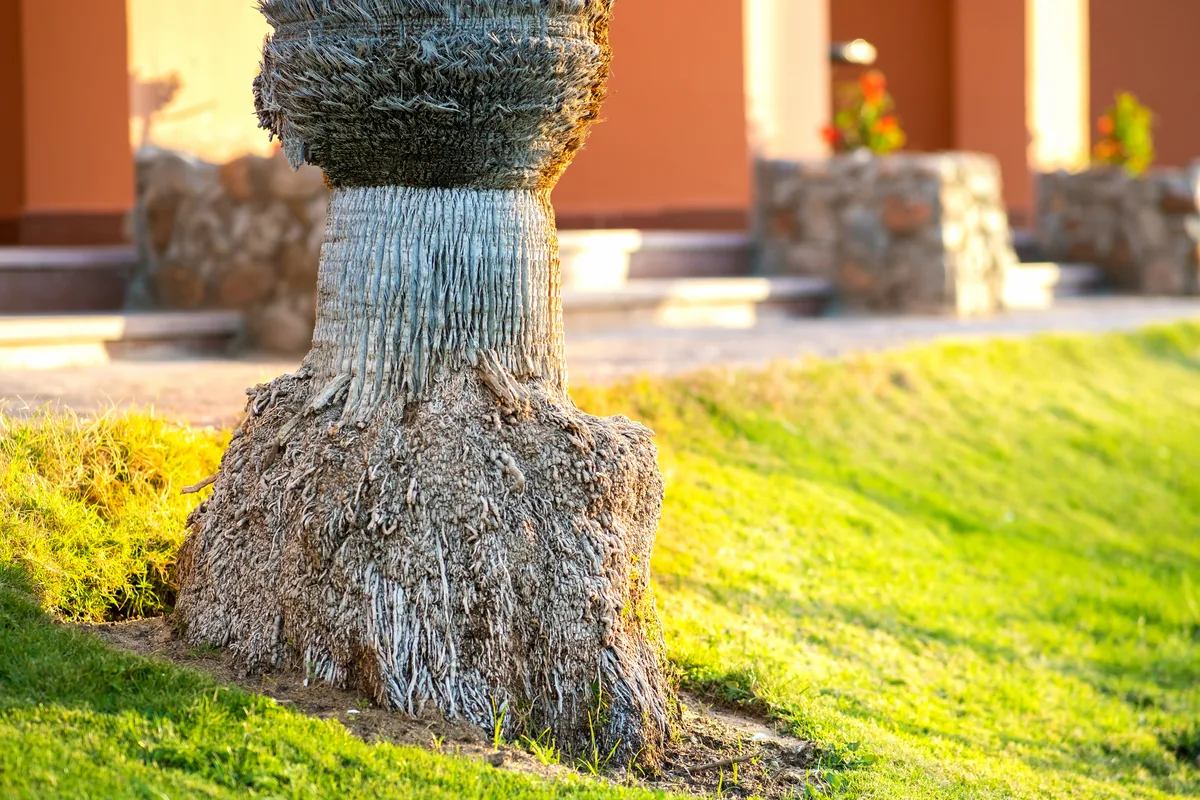
Sometimes the honest quote is a removal quote, and the most common reason in Florida is Ganoderma butt rot.
Ganoderma zonatum is a lethal fungal disease that affects all palm species. Per UF/IFAS, there is no cure and no fungicide recommendation for it. The identifying sign is a conk, a hard shelf-like fungal growth at the base of the trunk with a glazed reddish-brown top surface and a white underside.
Two cost implications follow. First, an infected palm is a removal, and paying to trim it is money wasted. Second, because the fungus lives in the soil and the spores persist there, you should not replant another palm in the same spot. If a company offers to replace the diseased palm with a new palm in the same hole, they either do not know that or are not telling you.
Palm Costs on the Treasure Coast
Swift works Port St. Lucie and across the Treasure Coast, covering St. Lucie, Martin, and Indian River counties. Two local realities show up in most quotes here.
Salt exposure. Barrier island and near-lagoon properties are harder on palms. Salt-laden wind is constant, and it changes which species are worth replanting when one has to come out. Spending slightly more on the right species usually beats repeatedly paying to maintain the wrong one.
Storm season demand. Prices and lead times both tighten as hurricane season approaches, because every reputable crew books up at the same time. Scheduling work in late winter or early spring generally means better availability and a less rushed job than calling when a storm is already named.
How to Compare Palm Quotes Fairly
Cheap and expensive quotes are often not quoting the same job. Before comparing numbers, make sure each quote answers these:
- Is debris haul-away included, or billed separately?
- Is stump grinding included in a removal, or an add-on?
- Is a permit required, who files it, and is the fee in the price?
- Will mitigation planting be required afterwards?
- Is the company insured, and will they send a Certificate of Insurance before work starts?
- Is the quote in writing and itemised?
- What exactly is being cut? A quote that promises to “clean it right up” may be describing a hurricane cut.
A written, itemised quote is the simplest protection you have. If a company will not put the scope in writing, the number on the verbal quote does not mean very much.
Frequently Asked Questions
How much does it cost to trim a palm tree?
Typically $100 to $650 per palm, based on 2026 national cost data. Palms in the 30 to 60 foot range run $150 to $900, and very tall palms over 80 feet can reach $1,000 to $1,500. Clear trunk height and access drive most of the difference.
How much does palm tree removal cost?
Generally $150 to $1,500. Palms up to 60 feet usually fall between $150 and $900, while palms over 80 feet run $700 to $1,500. Stump grinding adds roughly $100 to $250, and debris hauling $200 to $300 where it is billed separately.
Do I need a permit to remove a palm in Florida?
Often, yes. It depends on your jurisdiction and the palm’s clear trunk height, and native palms such as sabals are the most likely to be protected. Florida Statute 163.045 waives the permit only when a certified arborist documents that the palm is an unacceptable risk to people or property. Check before the saw comes out, because removing a protected palm without a permit can bring a fine plus a mitigation planting requirement.
Is it cheaper to remove a palm than a regular tree?
Often, at the same height, because there is no spreading canopy to dismantle piece by piece. But access changes that fast. A palm wedged between a pool cage and a fence can cost more than a larger tree standing in an open yard.
How often should palms be trimmed?
There is no official standard. Dead fronds and old fruit stalks can be removed at any time, but healthy green fronds should be left on the palm. If a company recommends several visits a year for a healthy palm, ask what exactly they intend to cut.
Should I get my palms hurricane cut before a storm?
No. UF/IFAS found that hurricane-cut palms were more likely to lose their crowns in the 2004 and 2005 hurricanes than palms with full canopies. Removing dead fronds and loose fruit before a storm is worthwhile; stripping the canopy is not.
Can I replant a palm where a diseased one was removed?
Not if the palm had Ganoderma butt rot. The fungus survives in the soil, so UF/IFAS advises against replanting another palm in the same location. A non-palm species is the safer choice.
Get a Written Palm Quote on the Treasure Coast
The ranges above are national averages and a reasonable sanity check, but the only number that matters is the one for your palm, your access, and your jurisdiction.
Call before noon and we are on site the same day, with an itemised written quote in your inbox within four hours. ISA Certified Arborist, fully insured, and a Certificate of Insurance sent before any crew steps on your property. Permit filing is included on qualifying removals, and financing is available on jobs over $1,500.
Call (772) 773-6676 or request a free estimate.
Sources: Cost ranges from HomeGuide and Angi 2026 palm trimming and removal cost data. Pruning and hurricane-cut findings from UF/IFAS EDIS ENH1182/EP443, Pruning Palms. Ganoderma information from UF/IFAS EDIS PP54/PP100, Ganoderma Butt Rot of Palms. Permit exemption from Florida Statute 163.045. Prices are typical market ranges for comparison, not a quote.