
Monocots, not dicots
Palms have no secondary growth, no cambium layer, and no wound healing the way oaks and maples do.
Your queen palm is dropping fronds in the pool. The coconuts on the front entry are starting to look like a lawsuit. Or you moved to the Treasure Coast from out of state, asked a lawn guy to shape up the palms, and now they look like 9-and-3 clock hands and you have a bad feeling about whether they will survive the summer. Palm care in Port St. Lucie, FL and across the Treasure Coast is its own discipline. Get it wrong and you don’t just lose the look. You lose the palm. ANSI A300 + ANSI Z133 standards · ISA palm pruning protocol on every job · Free same-day assessment.
A palm looks like a tree to most people, but biologically it is closer to a giant blade of grass. That difference changes everything about how it should be pruned, and why the lawn-care chainsaw approach is the single most common reason palms decline in Port St. Lucie. Swift follows the ISA palm pruning protocol on every job, refuses hurricane cuts even when asked, and treats every visit as a Ganoderma inspection.
Request a free quote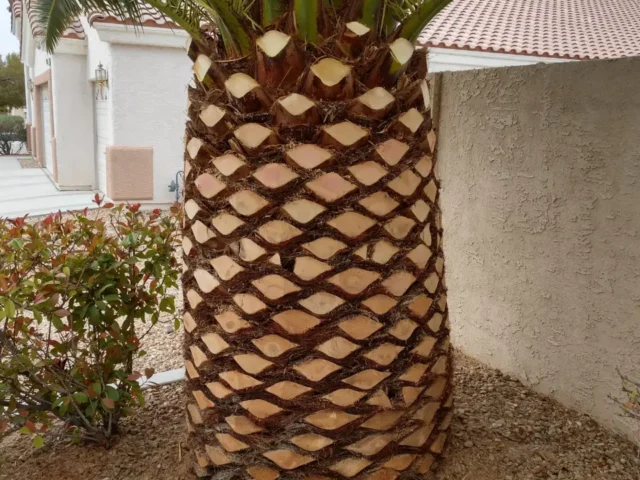
Over-pruning a palm is functionally the same as starving it. Knowing why protects your palms from the lawn-care chainsaw approach.
Palms have no secondary growth, no cambium layer, and no wound healing the way oaks and maples do.
There is only one growing point: the bud at the top of the trunk. Damage the bud and the palm dies.
Each frond is a multi-year photosynthesis investment. Palms cannot regrow lost canopy on demand.
Pruning wounds on palms do not close. They scar permanently and become entry points for disease and pests.
Nutrients move from old fronds back into the trunk and bud. Removing healthy fronds removes the palm’s reserve nutrients.
Five rules that separate appropriate maintenance from over-pruning.
Remove only dead, brown, or fully drooping fronds. If a frond is still green and above horizontal, it stays.
Never cut above the horizontal plane (the 9-to-3 clock position), the line that separates appropriate maintenance from over-pruning.
Remove seed pods, flower stalks, and developing fruit when they create a liability or maintenance burden.
Never use climbing spikes on live palms. Spike wounds do not heal on palms and become permanent disease entry points.
Disinfect pruning tools between palms. Lethal palm diseases (Fusarium wilt, Texas Phoenix decline) transmit on contaminated blades.
ISA Certified Arborist or senior climber identifies each species, condition, Ganoderma signs, and salt-stress symptoms. Cadence recommended per palm.
Aerial lift for street-side and roadside palms · rope-and-saddle for tight backyard access. No spikes on live palms. Ever.
Dead and brown fronds removed. Green fronds above horizontal preserved. Pods and flower stalks removed where requested. Tools disinfected between palms.
All fronds, pods, and debris removed from the property. Same-visit access to add stump grind or removal if needed.
The 9-and-3 shape (also called the rooster tail or over-trimming) is one of the most damaging practices in palm care. It looks tidy, sells well in lawn-care upsells, and is documented to make palms more vulnerable to storms, not less.
Over-pruned palms lose the canopy that actually protects the bud in high winds. The myth is fewer fronds = less wind catch. The opposite is true.
Removing green fronds removes the stored nutrients the palm depends on through the next season.
Hurricane-cut palms grow slower, become more susceptible to pests and disease, and have weaker trunks over time.
The visible trunk-narrowing above hurricane cuts is a documented symptom of nutrient deficiency caused by over-pruning. The trunk becomes structurally weaker right where you need it strongest.
Your palms have been losing reserves every year. Restoration is possible, but the only path is stopping the practice immediately and giving the palm time to rebuild canopy.
Native, salt-tolerant, hurricane-resistant. Holds dead fronds (a petticoat) that some owners prefer kept and some prefer removed. Annual dead-frond removal is enough.
Fast-growing, popular, but shallow-rooted and hurricane-prone. Heavy seed-pod producer. Often needs a mid-summer pod-management visit on top of the annual trim.
Towers up to 80 feet. Drops fronds and seed in volume, often a maintenance and code concern. Tall-lift access required.
Showy, fast-growing, drops massive fronds that can damage roofs and vehicles when they fail. Self-cleaning crown-shaft on healthy specimens.
Classic look, but coconuts are a real falling-fruit liability over walkways, pool decks, and parking. Pod and fruit removal is part of every visit.
Smaller-scale specimens with their own pruning specifics. One-size-fits-all palm pricing usually means one-size-fits-all damage. Tell us what is on the property and we will quote each species appropriately.
Properties on Hutchinson Island, North Hutchinson Island, and the immediate Indian River shoreline see meaningfully different palm performance than properties three miles inland. We flag salt-stress symptoms (leaf-tip browning, frond yellowing, premature drop) during the assessment and recommend nutrient and irrigation adjustments alongside the pruning scope.
Built for coastal exposure. These species thrive on barrier-island lots with regular salt spray.
Tolerate salt with care. Watch for salt-stress symptoms on the most exposed wings of the property.
Plant on the interior side of the property, away from direct salt spray. Otherwise expect short lifespans.
For most species, once or twice a year is enough. Cabbage palms can go longer between visits. Heavy seed-producing palms (queens, washingtonias, coconuts) often need a mid-summer visit to manage pods and falling fruit before they become a liability.
No. The hurricane cut (9-and-3 shape) removes nutrient-storing fronds, weakens the palm over time, and increases storm vulnerability rather than reducing it. The right hurricane-season prep on palms is removing only dead, brown, and below-horizontal fronds plus seed pods.
A half-moon-shaped reddish-brown conk at the base of the trunk, white on the underside, up to 8 inches wide. There is no cure. The palm needs to be removed, the stump ground, and the soil zone documented. Do not replant another susceptible palm in the same spot.
Generally late spring through summer when palms are actively growing and wounds (even on palms that do not heal) are least vulnerable. Avoid trimming during cold snaps. Hurricane-season prep is most effective when done before June.
Yes, on request. Coconut and large seed-pod removal is a common scope, especially over pool decks, walkways, driveways, and parking areas where falling fruit is a real liability.
Only with utility coordination. Palms in contact with primary or service-drop lines require the utility provider to de-energize before any work. Swift coordinates the request when the palm canopy is in the conductor zone.
Yes. We work coastal properties across St. Lucie, Martin, and Indian River counties and adjust the pruning scope, nutrient recommendations, and species selection for salt-exposed lots.
Never on live palms. Spike wounds on palm trunks do not heal because palms have no wound-closure mechanism. Each spike puncture becomes a permanent entry point for pests and disease. Professional palm pruning uses aerial lifts or rope-and-saddle access.
When lightning, microburst, or storm wind takes the head off a queen palm or splits a royal palm crown, the response is emergency removal and cleanup, routed through the 24/7 Emergency Tree Service line with a 60 to 90 minute on-site target across all three counties. Palms that lose the bud cannot recover. Palms that lose major canopy can sometimes be saved. We make the call on site.
Ganoderma butt rot (Ganoderma zonatum) is a lethal palm disease across the Treasure Coast with no cure. Identification: half-moon-shaped conk at the base of the trunk, typically within the lower 3 to 4 feet · reddish-brown glazed top, white undersurface, up to 8 inches wide · wilting canopy appears only after 80 to 90 percent of the trunk has rotted internally, meaning by the time the palm looks sick the disease is already terminal. There is no chemical cure, no inoculation, no soil treatment that saves an infected palm. The only response is removal plus stump grinding plus soil management plus a no-replant radius for susceptible palm species. For removal and stump work, see Tree Removal and Stump Grinding.
Another company hurricane-cut my queen palms last year and they looked awful. Swift came in, explained the 9-to-3 standard, and trimmed them correctly. Night-and-day difference, and the palms are actually healthier now.
Ten sabal palms done in two hours. Sterilized tools between each palm, seed pods removed, full cleanup. No upcharge surprises at the end. Already scheduled the next annual visit.
My coconut palms were showing early signs of lethal yellowing. Swift spotted it during the trim, explained what to watch, and told me honestly when replacement would be the right call. That kind of candor is rare.
Same-day on-site assessment · Written quote in 4 hours · Fully insured · Family-owned